Texas-sized heat.
A better-insulated space.
Open-cell and closed-cell spray foam for suitable homes, shops and commercial assemblies. Start with your building—and the way you use it.
Find the foam
that fits.
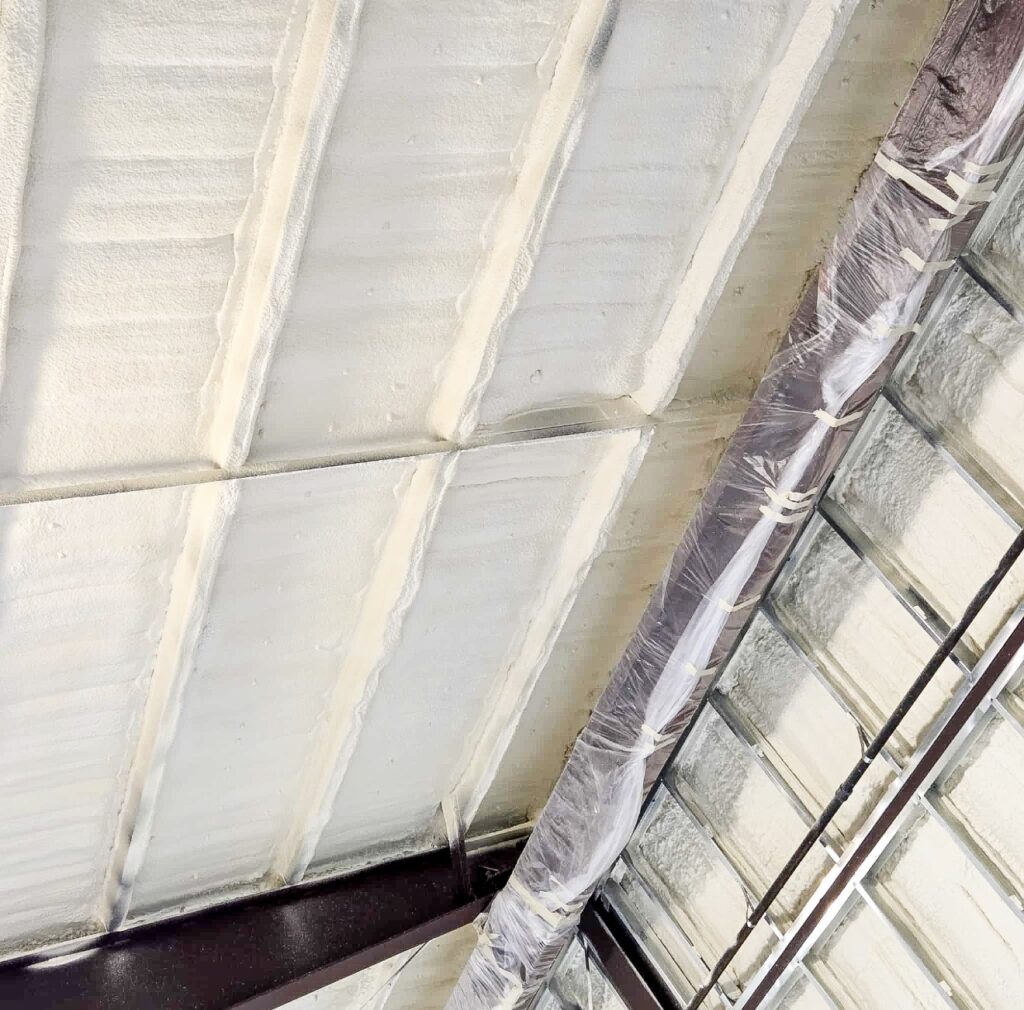
Open-cell and closed-cell foam have different properties. Explore each option, then let’s review your framing, available space, moisture conditions and goals.
Open-Cell
Spray Foam
Room to expand. A plan for comfort.
A lower-density insulation option for suitable wall cavities, rooflines and accessible framing. Open-cell foam can provide insulation and air control at its approved thickness, with moisture management planned around the assembly.
Closed-Cell
Spray Foam
Make every inch work harder.
A denser, rigid insulation with generally higher R-value per inch and lower vapor permeability than open-cell foam. Consider it for suitable metal buildings, walls and depth-limited assemblies, with product and thickness selected for the job.
Good insulation.
A complete plan.
The foam is one part of the building envelope. Coverage, installed depth and connections to surrounding materials all affect the result.
From plans to
a clear insulation scope.
Tell us about the project.
Send your location, plans or dimensions and a few photos. Tell us what you’re building or improving and how the space will be used.
Compare suitable options.
We review framing, substrates, coverage, available depth and project requirements to discuss which foam may fit.
Know what is included.
Define the installation areas, preparation, specified thickness, required protective coverings and product-specific occupancy instructions.
A few good questions.
Which foam is right for my building?
That depends on the assembly, available depth, moisture conditions, substrate and performance goals. The two service pages explain the main differences; plans and photos help us review your specific project.
Can spray foam be installed in an existing building?
It may be suitable where surfaces are accessible and in acceptable condition. Existing insulation, finishes, moisture issues and the surrounding assembly need to be reviewed before the scope is confirmed.
Will spray foam lower my energy bills?
Improving insulation and reducing air leakage can help reduce heating and cooling demand. Actual results depend on the building’s starting condition, coverage, HVAC performance, weather and use. A fixed savings percentage is not promised.
Can spray foam be used in a metal shop?
Suitable metal building assemblies can be considered. We review substrate condition, roof integrity, indoor use, humidity, ventilation and required protective coverings before recommending an approach.
Where do you work?
We serve Bryan–College Station, the Brazos Valley and Montgomery County, including Montgomery, Conroe and surrounding communities. Contact us to discuss your project location and schedule.
What do you need for a quote?
Send your project location, plans or dimensions, photos and the areas you want insulated. Include whether it is a new build or existing building, how it will be used, and your anticipated timeline.
Have plans?
We’re ready to look.
From a new home to a hardworking shop, let’s find the next step for your insulation project.
Send your plans, photos or dimensions. We’ll help you review suitable options and define the installation scope.
Request a spray foam quote