Texas heat.
Meet your match.
Batts, BIBS and attic blown-in fiberglass. Practical insulation options for the walls around you and the attic above you.
Find the right fit
for your space.
Building new, opening up walls or upgrading an existing attic? Explore the fiberglass options below. We’ll help match the installation method to the areas you need insulated.
Fiberglass Batts
A familiar material. A fit that matters.
Precut insulation fitted into suitable wall, floor and ceiling cavities. Proper sizing and careful installation around framing, wiring and plumbing help avoid gaps and compression.
BIBS
Blown-In Blanket System
Fiberglass blown behind netting to fill suitable framing cavities before finishes go in. BIBS provides an option for irregular spaces and cavities with wiring or plumbing, with installation density specified for the system.
Attic Blown-In
Give your attic a better blanket.
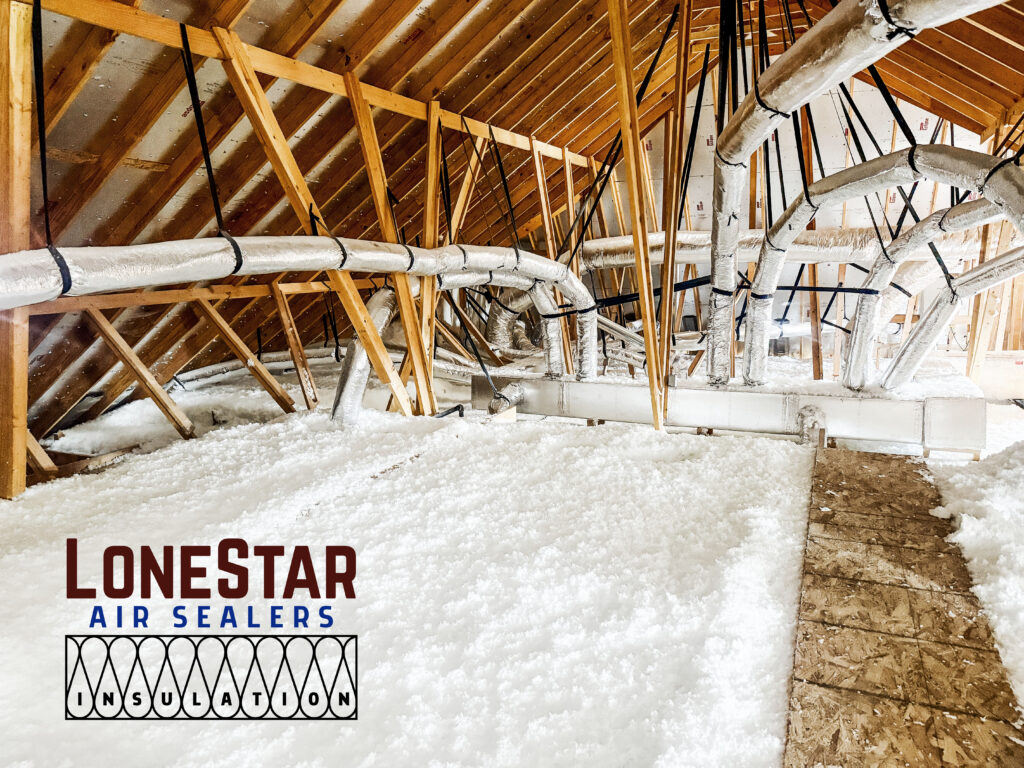
Loose-fill fiberglass blown across a suitable attic floor for consistent coverage at the specified depth. Ideal projects start with a review of existing insulation, air leaks, ventilation paths and preparation needs.
Good insulation.
Careful installation.
Performance depends on the product, coverage and how it fits the assembly. We review the details that can leave a space under-insulated or poorly prepared.
Slow the heat.
Address the air leaks.
Fiberglass provides thermal resistance. It is not a substitute for a continuous air barrier. Gaps around penetrations and building-envelope connections should be reviewed as part of the insulation plan.
New framing?
Existing attic?
The best starting point depends on access, framing and the condition of the space. Each installation method has a role.
| Option | Where to start |
|---|---|
| Batts | Accessible wall, floor or ceiling cavities where insulation can be fitted around the framing and obstructions. |
| BIBS | Suitable framing cavities held with netting and filled with blown fiberglass to the system’s specified density. |
| Attic blown-in | Suitable attic floors needing an installed blanket of loose-fill fiberglass at the specified coverage and depth. |
From plans or photos
to an insulation scope.
Tell us about the space.
Send plans, photos or approximate dimensions. Tell us whether it is a new build, remodel or existing-home upgrade.
Match the installation.
We review access, framing, existing materials, performance goals and preparation needs to discuss suitable options.
Define what is included.
Establish coverage, specified R-value, product requirements and any related air sealing, removal or ventilation details in the scope.
A few good questions.
Which fiberglass option do I need?
Batts and BIBS are options for suitable framing cavities, while attic blown-in is commonly used across attic floors. Access, framing, obstructions and the assembly requirements help determine the right method.
What is the difference between BIBS and attic blown-in?
BIBS holds blown fiberglass behind netting in framing cavities at the system’s specified density. Attic loose-fill fiberglass is installed as an open blanket across the attic floor using the product’s coverage and depth requirements.
Can new attic insulation go over the old material?
Sometimes. Existing material should be evaluated for moisture, contamination, damage and compatibility before adding more. Necessary repairs, air sealing or removal should be addressed as part of the scope.
How much insulation do I need?
The target R-value depends on the assembly and applicable project requirements. Depth, density and coverage depend on the selected product. We use its installation information rather than assuming one depth fits every fiberglass material.
Does fiberglass stop drafts?
Fiberglass insulation is not an air barrier. Drafts and air leakage need to be addressed through air sealing and the assembly’s air-control layer, alongside thermal insulation.
Can fiberglass help with sound?
It can be part of a sound-control assembly, but results depend on the complete wall or floor system, including framing, finishes and openings. Insulation alone does not make a room soundproof.
Where do you work?
We serve Bryan–College Station, the Brazos Valley and Montgomery County, including Montgomery, Conroe and surrounding communities. Contact us to discuss your project location and schedule.
From bare framing
to a better attic.
Tell us what you’re building or improving. We’ll help you find the next step for your fiberglass insulation project.
Send plans, photos or approximate dimensions. For an existing attic, let us know about comfort concerns and any known moisture or insulation issues.
Request a fiberglass quote