Tough conditions.
Purpose-built protection.
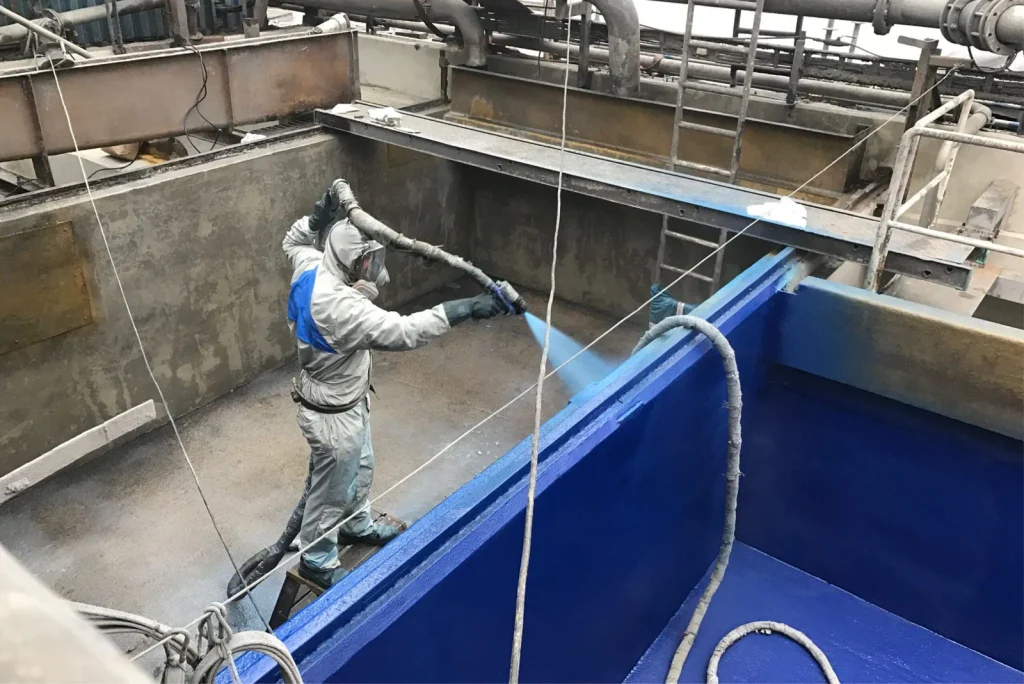
Protective lining options for compatible tanks, berms and containment areas. Selected around what you hold—and the conditions it creates.
The right lining starts
with the right information.
A tank holding water and a containment area exposed to chemicals need different specifications. The contents, temperature and duration of exposure all belong in the conversation.
LoneStar Air Sealers reviews protective lining and secondary containment projects for compatible concrete and metal surfaces throughout the Brazos Valley and Montgomery County. We work from your application requirements to explore suitable coating systems and define the installation scope.
What does it hold?
What does it face?
There is no single lining for every liquid, chemical or operating condition. Product selection needs to be based on the actual service environment.
Safety data sheets and project specifications help begin the review. Suitability must be confirmed against the selected product’s documentation and intended use.
Different contents.
Different requirements.
These applications are starting points for a technical review. The lining, substrate and details must work together as a specified system.
Secondary containment
Explore lining options for compatible berms, curbed enclosures and containment surfaces. The substances involved and required containment performance guide system selection.
Tank interiors
Review lining options for compatible concrete or metal tanks. Contents, operating temperatures and immersion conditions are essential to the specification.
Process & service areas
Discuss surfaces exposed to specified liquids, washdown or chemical contact. Exposure frequency, cleaning practices and traffic help define the system.
Concrete containment surfaces
Evaluate existing concrete, joints, cracks and penetrations before selecting a lining. Surface condition and moisture requirements must be addressed.
Metal tanks & enclosures
Review existing coatings, corrosion and substrate condition. The selected lining determines preparation, priming and application requirements.
Water-related applications
Discuss selected water and wastewater lining projects. Drinking-water contact requires a system with the applicable approvals for the specific intended use.
The details belong
in the plan.
Joints, transitions, cracks and penetrations need attention alongside the main surface. Their condition can affect the scope and suitability of a lining project.
| Project detail | What we review |
|---|---|
| Substrate condition | Concrete or metal condition, deterioration, corrosion, contamination and previous coatings. |
| Cracks & joints | Existing damage, movement and the treatment required by the specified system. |
| Penetrations & transitions | Pipe entries, drains, corners, terminations and connections to adjacent materials. |
| Contents & exposure | Chemical compatibility, concentrations, temperature and intermittent or continuous contact. |
| Access & downtime | Site access, tank preparation, application conditions and the required cure period before service. |
Review. Prepare.
Line with purpose.
Understand the service.
Provide contents, operating conditions, dimensions and specifications. Manufacturer or project-engineer review may be needed to confirm a suitable system.
Address the substrate.
Define cleaning, surface preparation, repairs, priming and detailing. The preparation requirements depend on the surface and selected lining.
Follow the specification.
Application conditions, thickness, quality checks and return-to-service requirements are established around the specified system and project scope.
Drinking-water contact?
Start with approvals.
A general-purpose coating should not be assumed suitable for potable-water contact. Any proposed system needs the applicable approvals for the specific intended use.
Tell us what the tank holds and provide any owner, engineer or project requirements. Availability and suitability are confirmed during the technical review.
Your containment questions, answered.
Can any coating be used for chemical containment?
No. Suitability depends on the specific product and the chemical, concentration, temperature and duration of exposure. The complete system needs to be reviewed for the intended service.
Can you line an existing tank or containment area?
Possibly. Existing coatings, contamination, substrate condition, access and repair needs must be evaluated first. Some surfaces may need substantial preparation or repairs before lining.
Is a lining suitable for continuous immersion?
Only when the selected system is suitable for the actual immersion conditions. Contents, operating temperature, preparation, application and cure requirements must be confirmed.
Will a coating repair cracks or structural damage?
Existing damage needs to be assessed. A lining is not a substitute for necessary structural repairs. Cracks, joints and movement require treatment appropriate to the structure and specified coating system.
Can the lining be used in a drinking-water tank?
That requires a system with the applicable approvals for the specific potable-water use. Tell us the tank’s intended service and any required specifications before product selection.
How long will the area be out of service?
Downtime depends on access, cleaning, repairs, preparation, application and the selected lining’s cure requirements. Return to chemical or immersion service must follow the product’s requirements for the actual conditions.
What should I send for a quote?
Send your project location, photos, dimensions, substrate, contents and operating conditions. Include safety data sheets, existing lining information and any engineer or owner specifications when available.
Tell us what it holds.
We’ll start there.
Bring us your project details so we can review the requirements and discuss the next step.
Send location, photos, dimensions, contents and operating conditions. Plans and project specifications are welcome.
Discuss containment & liningsServing the Brazos Valley and Montgomery County, including Bryan–College Station, Montgomery, Conroe and surrounding communities.