Make every
inch work harder.
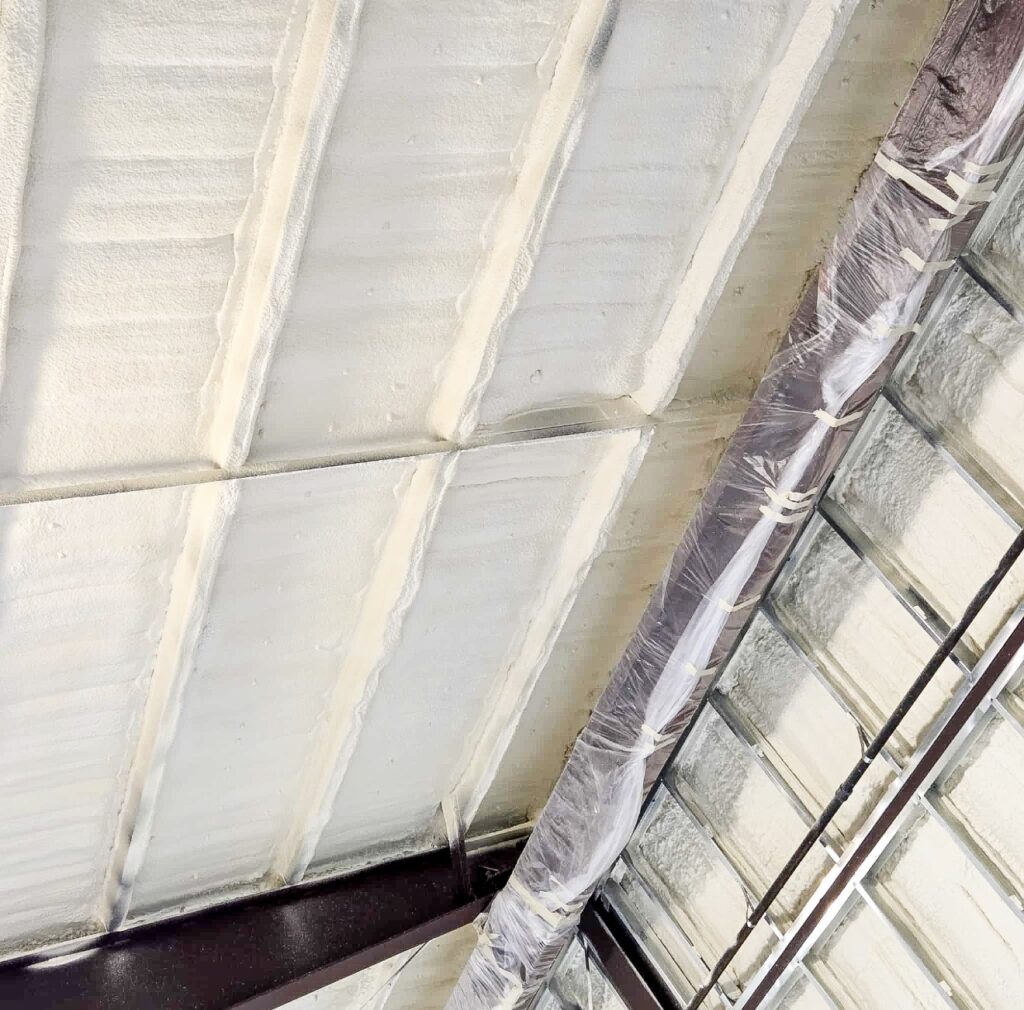
Closed-cell spray foam insulation for suitable walls, rooflines and metal building assemblies. Higher R-value per inch, with a plan built around your project.
More thermal resistance
in the space you have.
Closed-cell spray polyurethane foam is a higher-density, rigid insulation with a generally higher R-value per inch than open-cell foam. It can be worth considering when space is limited or the assembly calls for its particular properties.
At approved thicknesses, continuous installation can provide air control and the product may also function as a vapor retarder. Those properties need to be coordinated with the surrounding materials and the building’s moisture-management plan.
LoneStar Air Sealers helps builders, homeowners and commercial property owners review spray foam applications throughout the Brazos Valley and Montgomery County.
Thermal performance.
Air control.
Moisture planning.
The right insulation depends on the assembly. We review the surface, available depth and operating conditions before defining the installation.
Different buildings.
A tailored approach.
Closed-cell foam is an option for suitable, accessible surfaces. The substrate, available space, exposure and project requirements help determine the right approach.
Metal buildings & shops
Explore closed-cell foam for suitable metal building walls and roof assemblies. Substrate condition, roof integrity, interior use and moisture design guide the scope.
Depth-limited wall cavities
Consider a higher R-value per inch where framing depth is limited. Installed depth and assembly performance still need to meet the project’s requirements.
Roofline assemblies
Review closed-cell foam for suitable roofline applications. Roofing materials, deck condition, drying potential and mechanical systems belong in the design.
Rim joists & transitions
Review accessible rim joists and building-envelope connections where insulation and air-control continuity need attention. Surface condition and detailing matter.
Remodels & additions
Use exposed framing as an opportunity to review insulation. We assess how the proposed foam connects to existing insulation, finishes and moisture-control layers.
Commercial & specialty projects
Send plans and specifications for suitable commercial applications. Occupancy, substrate compatibility and required protective coverings help determine feasibility.
Closed-cell or open-cell?
Start with the building.
The choice depends on the properties your assembly needs. Cavity depth, moisture control and installation scope matter alongside the material price.
| Consideration | Closed-cell foam | Open-cell foam |
|---|---|---|
| Material | Higher-density, rigid foam with a closed-cell structure. | Lower-density foam with an open-cell structure. |
| R-value per inch | Generally higher; useful where available depth is limited. | Generally lower; needs greater depth for the same R-value. |
| Vapor control | Generally less vapor-permeable; vapor-retarder performance depends on product and thickness. | Generally more vapor-permeable; additional vapor control may be needed for some assemblies. |
| Air control | Can provide air control at an approved thickness with continuous installation. | Can provide air control at an approved thickness with continuous installation. |
| Selection | Review space, moisture behavior, substrate and assembly requirements. | Review available cavity depth, moisture design and project goals. |
Specific R-values, minimum air-barrier thicknesses and vapor-retarder properties come from the selected product’s documentation. Neither foam replaces flashing, roof repairs or a properly designed water-management system.
Insulate the surface.
Understand the conditions.
How you use a shop or metal building affects the insulation approach. Heating, cooling, humidity, roof condition and interior activities should all be reviewed.
Start with the substrate.
Review leaks, corrosion, existing finishes and surface suitability. Necessary repairs and preparation come before foam application.
Plan for the environment.
Condensation control depends on temperatures, indoor humidity, air leakage and the assembly—not simply the presence of foam.
Account for how it’s used.
Discuss the intended use, HVAC and ventilation needs, plus the protective coverings or approved assemblies required for the project.
Installation details
make the difference.
Think beyond
“water-resistant.”
Closed-cell foam generally resists water absorption more than open-cell foam and can restrict vapor movement at a suitable thickness. Those properties do not make every installation waterproof or appropriate for every wet location.
Your closed-cell questions, answered.
What is closed-cell spray foam?
It is a higher-density, rigid spray polyurethane foam insulation. It generally provides a higher R-value per inch and lower vapor permeability than open-cell foam. Exact properties depend on the selected product and installed thickness.
How thick does it need to be?
The required thickness depends on product ratings, target R-value and the assembly design. Minimum thickness for air-control or vapor-retarder performance may differ from the thickness needed for thermal performance.
Is closed-cell foam waterproof?
Do not treat it as a universal waterproofing solution. Its water-absorption and vapor properties depend on the product, but a complete assembly still needs appropriate roof, flashing, drainage and moisture-management details.
Can it help with condensation in a metal building?
It may be part of a condensation-control strategy when properly specified and installed. Results depend on coverage, surface temperatures, indoor humidity, air leakage, ventilation and use of the building. Existing leaks and corrosion need separate attention.
Can you spray over rust, wet surfaces or old insulation?
The surface must meet the selected product’s application requirements. Moisture, contamination, unsound coatings or corrosion may require corrective work. Existing insulation and access also need to be reviewed before the scope is confirmed.
Does it make a building stronger?
Some tested foam assemblies may have documented structural benefits. Those results should not be assumed for every installation. Any structural claim needs applicable test data and engineering for the actual assembly; foam does not replace necessary structural repairs.
Can it be used at the roofline?
It may be suitable in a properly designed roof assembly. Roof condition, substrate, drying potential, vapor control and mechanical systems need to be considered together. Existing leaks should be resolved before application.
Does the foam need a protective covering?
Thermal or ignition protection requirements depend on product approvals, location, occupancy and applicable project requirements. The scope should identify the coverings or approved assembly needed for the installation.
When can we use the building again?
Occupancy restrictions, application ventilation and return times follow the specific product and installation instructions. Coordinate access with the installer before work starts rather than assuming a single reoccupancy period.
What do you need to provide a quote?
Send the location, plans or dimensions, photos, substrate details and areas to be insulated. Tell us how the space is used, whether it is heated or cooled, and any known moisture or access issues.
Have a project?
Let’s put a plan to it.
Tell us what you’re building or improving. We’ll help you review closed-cell foam for the application.
Serving Bryan–College Station, the Brazos Valley and Montgomery County, including Montgomery, Conroe and surrounding communities.
Request a closed-cell foam quote