Water finds
a way.
Plan for it.
Coating-based waterproofing and surface protection for compatible substrates. Built around the exposure, the surface and the details that connect them.
Protect the surface.
Pay attention to the details.
Water exposure is only part of the picture. Drainage, movement, joints and connections all influence how a waterproofing system needs to be designed and installed.
LoneStar Air Sealers reviews coating-based waterproofing projects for compatible surfaces throughout the Brazos Valley and Montgomery County. We begin with the source of exposure and the condition of the substrate to explore a suitable approach.
Where is the water?
How does it get there?
Tell us where you see water, when it appears and what is beneath or beside the affected surface. That information helps determine what needs to be evaluated.
Drainage problems, structural damage and moisture within an assembly may need additional investigation or repairs before a coating system is appropriate.
Different exposure.
A considered approach.
These applications are starting points for review. Suitability depends on the substrate, drainage, movement, use and the requirements of the selected system.
Concrete surfaces
Review coating-based waterproofing options for compatible concrete. Surface condition, moisture, cracks and joints help determine the preparation and system.
Decks & elevated surfaces
Explore suitable systems for selected decks and elevated surfaces. Drainage, movement, edge details and the use of the space below are part of the review.
Mechanical & service areas
Discuss compatible systems for areas exposed to washdown, intermittent water or equipment use. Cleaning practices and traffic influence product selection.
Water-exposed structures
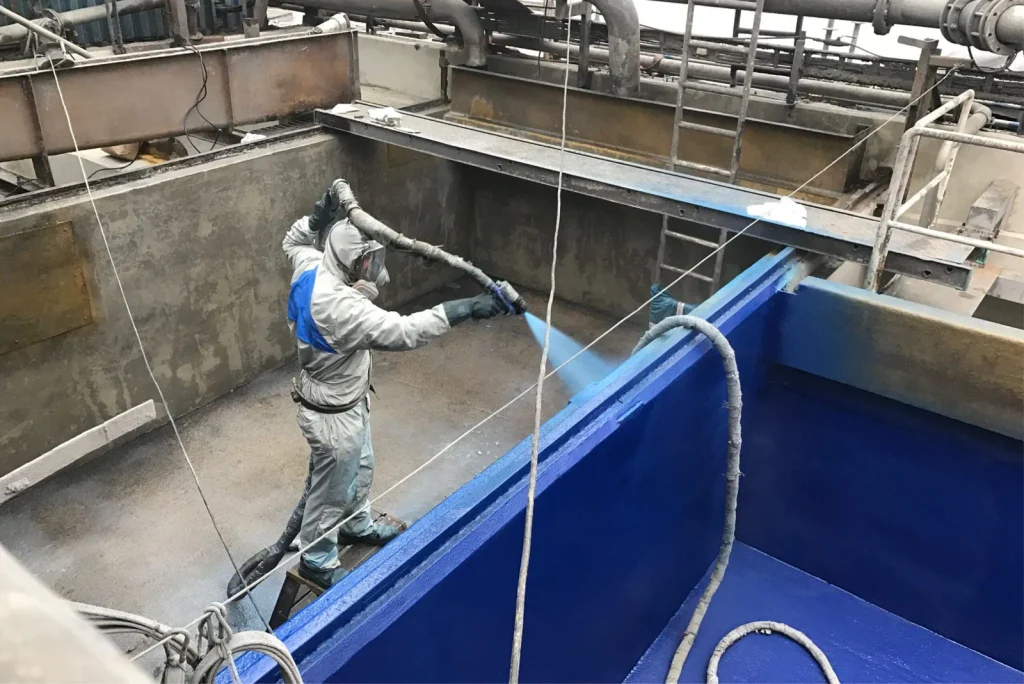
Review selected commercial and industrial surfaces exposed to water. The source, direction and duration of exposure guide the technical discussion.
Joints & transitions
Include connections between materials, penetrations and other vulnerable details in the project scope. Treatment needs to accommodate the conditions and selected system.
Traffic-bearing surfaces
Where a surface carries foot traffic or equipment, review appropriate wear layers, finish texture and traction requirements alongside waterproofing needs.
Waterproofing belongs
in the connections, too.
The membrane needs to work with the details around it. We review those conditions as part of the project rather than treating them as an afterthought.
| Project detail | What we review |
|---|---|
| Substrate & moisture | Existing materials, surface condition, previous coatings and moisture requirements for the proposed system. |
| Cracks & joints | Damage, movement and the treatment required for each detail. |
| Drains & penetrations | Drain connections, pipe entries and compatible transitions to adjacent materials. |
| Edges & terminations | How the waterproofing connects, ends and is protected at exposed boundaries. |
| Use & finish | Foot traffic, equipment, sunlight, wear layers, finish texture and maintenance needs. |
Review the problem.
Specify the protection.
Understand the exposure.
Start with photos, the surface location and when water appears. A site visit or additional assessment may be needed to identify the conditions that must be addressed.
Address the details.
Define cleaning, compatible repairs, surface preparation, priming and detailing around joints, drains, transitions and penetrations.
Follow the system.
The specification guides membrane application, reinforcement, wear layers or topcoats where required, plus curing and return-to-service conditions.
Water exposure.
Sunlight. Daily traffic.
A surface exposed only to water can have different needs than one used by people or equipment. Intended use helps determine the complete system.
Depending on the application, the specification may include a primer, membrane, reinforcement, wear layer or protective topcoat. Traction, cleaning and ongoing maintenance should be considered where people walk.
Your waterproofing questions, answered.
Can you coat an existing surface?
Possibly. Existing materials, adhesion, contamination, damage and moisture need to be evaluated. Some surfaces require repairs, removal of previous coatings or additional preparation before a waterproofing system is appropriate.
Will a coating fix poor drainage?
A coating does not correct the slope or drainage of the underlying surface. Water accumulation and drain conditions must be reviewed, and corrective work may be necessary before coating.
Can a waterproofing system handle cracks or movement?
That depends on the system and the conditions. Cracks, joints and structural movement need to be assessed and detailed appropriately. A coating is not a replacement for necessary structural repairs.
Can people walk on the finished surface?
Only when the complete system is suitable for the intended traffic. Walking surfaces may need specified wear layers, texture or other finish requirements, as well as an appropriate maintenance plan.
Can the system be used outside?
Outdoor use requires a review of sunlight, weather, temperature changes and water exposure. The selected membrane and any topcoat must be suitable for those conditions.
How long does the project take?
Timing depends on preparation, repairs, access, weather and the specified system’s application and cure requirements. Return to foot traffic, equipment use or water exposure must follow the product requirements.
What should I send for a quote?
Send your project location, photos, approximate dimensions and surface type. Explain when water appears, how the area is used and whether there is damage below or beside it. Plans and previous repair information are helpful when available.
Show us where
water is a problem.
We’ll help you explore the coating options and the next step for your surface.
Send photos, location, approximate dimensions and a description of the water exposure. Include any known drainage or previous repair issues.
Discuss waterproofing optionsServing the Brazos Valley and Montgomery County, including Bryan–College Station, Montgomery, Conroe and surrounding communities.